
Start A Community Conversation
Come Sit With Us. What's on Your Mind?
Every tusted solution begins with listening. Tell us what's on your mind, and we'll explore trusted solutions that may help our neighbors and neighborhoods.
Click a
Conversation:
- ❤️ Healthcare Conversation
- 🏢 Business Healthcare Conversation
- 💼 Income Opportunity Conversation
- 💬 Start Your Own Community Conversation
Everyone Has a Voice
What will you do with your voice?

What the data says about Healthcare in America
Group 1: People WITHOUT Healthcare Insurance
Group 1: People WITHOUT Healthcare Insurance
Group 1: People WITHOUT Healthcare Insurance

These people often avoid going to the doctor because they know they'll have to pay the full cost themselves.
Many wait until a medical problem becomes serious before seeking care.
Instead of preventive care, they often rely on:
-Urgent care
-Emergency rooms
-Free clinics
-Self-treatment
-Online research
Their biggest fear is receiving a medical bill they cannot pay.
Group 1: Their biggest complaints
Group 1: People WITHOUT Healthcare Insurance
Group 1: People WITHOUT Healthcare Insurance
- I can't afford to see a doctor.
- Medical bills are too expensive.
- Prescription drugs cost too much.
- I don't know where to go for affordable care
- I wait until I'm really sick.
Group 1: What government data shows
Group 1: People WITHOUT Healthcare Insurance
Group 1: What KFF (formerly Kaiser Family Foundation) data shows
The CDC consistently finds that uninsured adults are much more likely to delay or skip medial care because of cost.
Source:
Centers for Disease Control and Prevention (CDC)
National Health Interview Survey (NHIS)
Latest annual reports (2023–2025 publications based on survey data)
Group 1: What KFF (formerly Kaiser Family Foundation) data shows
Group 1: What KFF (formerly Kaiser Family Foundation) data shows
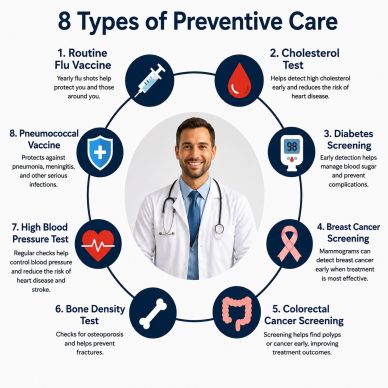
KFF reports that uninsured adults are significantly less likely to receive:
- preventive care
- cancer screenings
- chronic disease management
- regular primary care
Source
KFF
Key Facts about the Uninsured Population
Updated regularly (2024–2025 editions)
Group 2: People WITH Government or Public Insurance
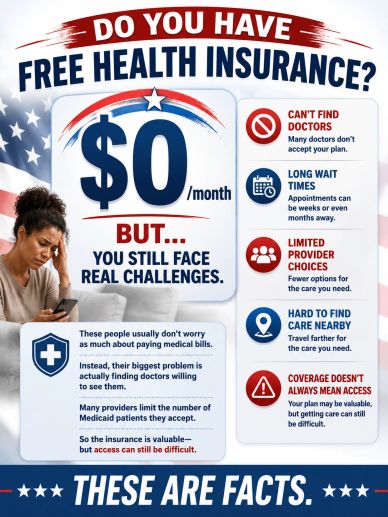
These people usually don't worry as much about paying medical bills.
Instead...
Their biggest problem is actually finding doctors willing to see them.
Many providers limit the number of Medicaid patients they accept.
So the insurance is valuable—but access can still be difficult.
Group 2: Biggest complaints
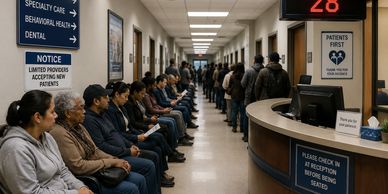
- I can't find a doctor accepting Medicaid.
- Appointments take too long.
- Specialists won't accept my insurance.
- Mental health providers are hard to find.
- Dental care is very limited.
Group 2: What government data shows
Group 2: What MACPAC (The Medicaid & CHIP Payment & Access Commission) data shows
Group 2: What MACPAC (The Medicaid & CHIP Payment & Access Commission) data shows

Medicaid.gov
States continue reporting provider shortages.
Access to:
- mental health
- dentistry
- specialists
remains one of the biggest issues.
Source
Centers for Medicare & Medicaid Services (CMS)
Group 2: What MACPAC (The Medicaid & CHIP Payment & Access Commission) data shows
Group 2: What MACPAC (The Medicaid & CHIP Payment & Access Commission) data shows
Group 2: What MACPAC (The Medicaid & CHIP Payment & Access Commission) data shows
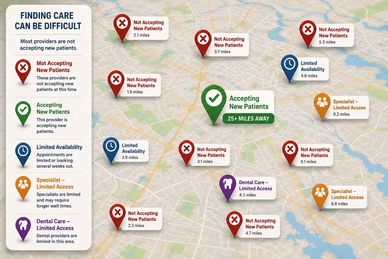
The Medicaid and CHIP Payment and Access Commission reports that:
Many Medicaid patients experience difficulty obtaining appointments because provider participation varies by specialty and location.
Source
MACPAC
Access in Medicaid Reports
2024–2025
Group 3: People WITH Health Insurance
Group 2: What MACPAC (The Medicaid & CHIP Payment & Access Commission) data shows
Group 3: People WITH Health Insurance

This is the fastest-growing frustrated group.
These people have insurance...
…but they still struggle to afford healthcare.
Many pay:
- $300–900 every month in premiums
and then still have
- deductibles
- copays
- coinsurance
before insurance really helps.
They often say...
"I have insurance...
...but I still can't afford to use it."
Group3: Biggest complaints
Group 3: People WITH Health Insurance

- My deductible is too high.
- My copays keep adding up.
- Everything needs prior authorization.
- I still get surprise bills.
- I pay every month but avoid going to the doctor anyway.
Group 3: What government data shows

One of the largest findings:
Many insured adults skip care because of cost.
Even with insurance.
Source
The Commonwealth Fund
2025 Biennial Health Care Affordability Survey
Group 3: What KFF data shows

Large percentages of insured Americans report delaying:
- doctor visits
- prescriptions
- tests
because of out-of-pocket costs.
Source
KFF Health Care Debt and Affordability Surveys
2024–2025
C2OC Data Summary
What ALL three groups have in common.

Although the reasons differ...
they all experience barriers to getting care.
Group 1: Uninsured - Can't afford healthcare
Group 2: Medicaid - Can't find providers
Group 3: Private Insurance - Can technically afford insurance but struggle to afford using it
What research says people actually want.

Across surveys from KFF, CMS, the Commonwealth Fund, and the CDC, consumers consistently prioritize:
- Affordable monthly costs
- Predictable pricing
- Same-day or next-day appointments
- Easy telehealth access
- A provider who listens
- Clear communication
- Easy prescription refills
- Minimal paperwork
- Fast access to specialists when needed
The emotional problem.
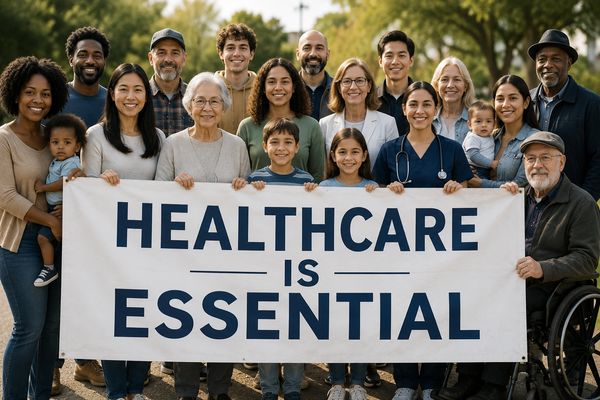
Interestingly...
their emotions become very similar.
People say things like:
"I just need to see a doctor."
"I don't know what this is going to cost."
"I don't want another surprise bill."
"I'll wait and hope it gets better."
"I don't have time to fight with insurance."
Start a Conversation: Current Conversation is Healthcare?
Or
Start a Conversation: Tell us what's on your mind?
If C2OC were summarizing the U.S. healthcare problem in one sentence.
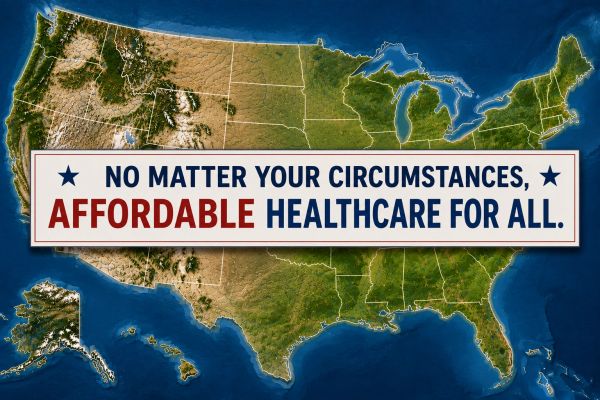
C2OC Sentence: Most Americans don't simply want health insurance—they want affordable, timely, and predictable access to healthcare.
For many people, the biggest obstacle isn't whether they have an insurance card. It's whether they can actually get care when they need it without facing excessive cost, long waits, or complicated administrative hurdles.
Primary sources
- Centers for Disease Control and Prevention (CDC) – National Health Interview Survey (NHIS). Ongoing annual survey; 2023–2025 reports. https://www.cdc.gov/nchs/nhis/
- Centers for Medicare & Medicaid Services (CMS) – Medicaid program information and access reports. https://www.medicaid.gov
- Medicaid and CHIP Payment and Access Commission (MACPAC) – Reports to Congress on Medicaid access, 2024–2025. https://www.macpac.gov
- KFF (formerly Kaiser Family Foundation) – Key Facts about the Uninsured Population (updated 2024–2025) and healthcare affordability surveys. https://www.kff.org
- The Commonwealth Fund – 2025 Biennial Health Care Affordability Survey and related affordability research. https://www.commonwealthfund.org
These organizations are among the most widely cited sources by policymakers, healthcare systems, insurers, and researchers for understanding healthcare access and affordability in the United States.